Running Stitch: The Easiest Embroidery Stitch to Learn First
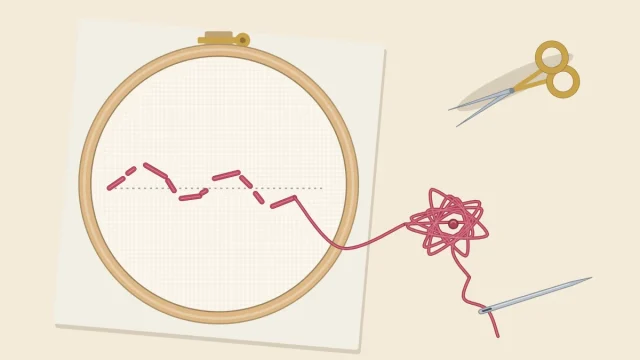
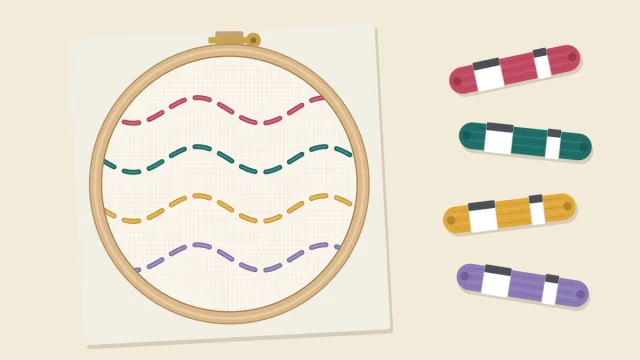
Running stitch is a simple dashed line and the natural first stitch for a beginner. Learn the four numbered points, how to keep stitches and gaps even, and three easy variations.
Hand embroidery for beginners, step by step
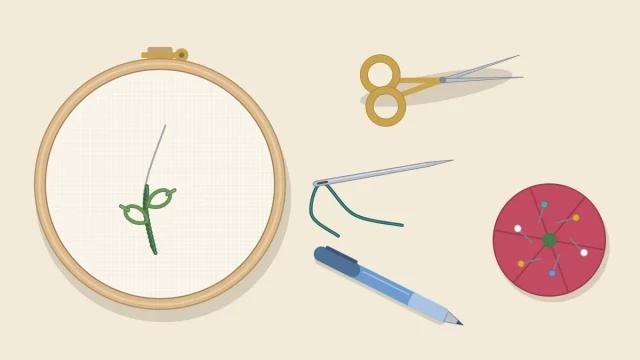
Clear, beginner-friendly guides to your first stitches: how to set up a hoop, thread a needle, work the seven basic stitches, and finish a simple project.
Five basic supplies, ten minutes of setup and three line stitches are enough for a first embroidery session. Here is what to gather, what to learn first and what a first piece really looks like.
A clean cut, a needle that fits the thread and the pinch-and-fold method get floss through the eye on the first try. Also: how long a tail to leave and why embroidery thread is not doubled.
Six-strand floss is made to be divided, but pulling it apart the wrong way knots it instantly. Cut a forearm length, pull one strand straight up at a time, then recombine the strands you need.
Three ways to anchor a new thread (simple knot, waste knot, anchoring stitches) and the knot-free way to finish it by weaving the tail under stitches on the back.
Layer the inner ring, fabric and outer ring, then tighten in stages while pulling gently at four points. Here is how to get fabric drum-tight without skewing the weave.
A pattern is a line drawing plus notes on stitch, color and strand count. Learn what solid lines, dashes, dots and shading mean, how color keys work and how to resize a design for your hoop.
Seven stitches that cover almost every beginner pattern, each with a numbered diagram.
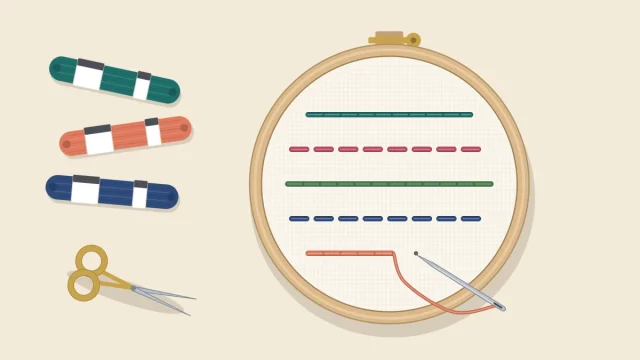
Running stitch is a simple dashed line and the natural first stitch for a beginner. Learn the four numbered points, how to keep stitches and gaps even, and three easy variations.
Backstitch gives a solid, unbroken line for outlines and lettering. Follow the three numbered points, then learn how stitch length controls smooth curves and sharp corners.
Stem stitch makes a slightly raised, twisted line that follows curves beautifully. Learn the three numbered points and the one rule that matters: keep the thread on the same side.
Satin stitch fills small shapes with smooth, parallel stitches. Outline the shape first, start across the widest part, and keep the stitches short and parallel for a clean edge.
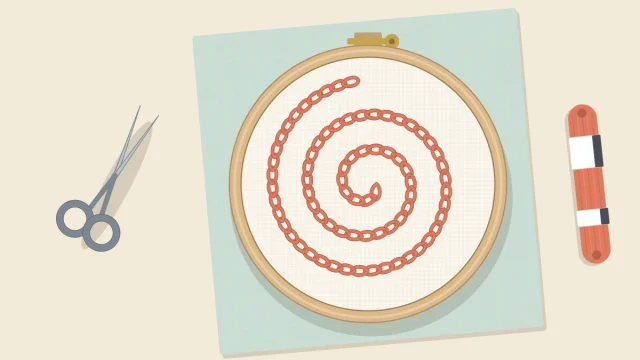
Chain stitch makes a bold line of linked loops. Learn how to form each link, keep the loops even, anchor the last one, work curves and use rows of chain as a filling.
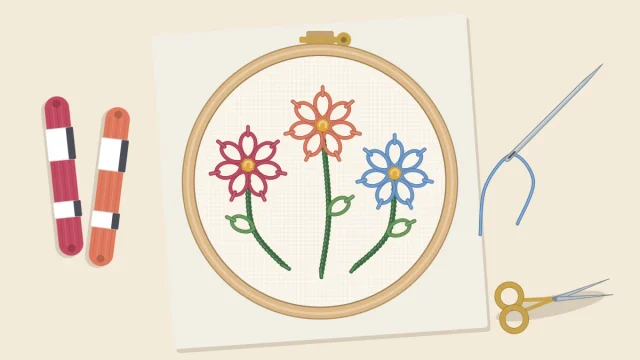
Lazy daisy stitch is a single anchored loop that makes an instant petal or leaf. Learn the three numbered points, then build a five-petal flower around a center.
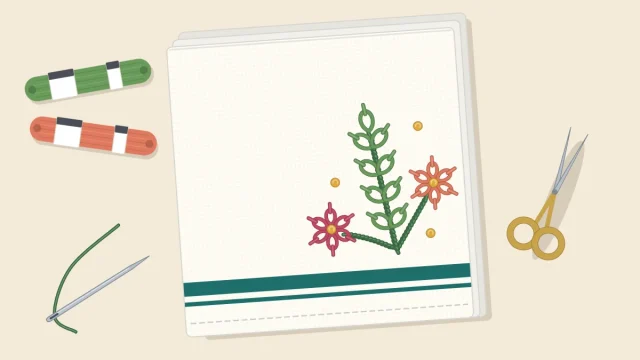
Embroider a small motif on a tea towel that can stand up to real use: prewash the towel, place the design near the hem, choose short sturdy stitches and secure every thread end without knots.
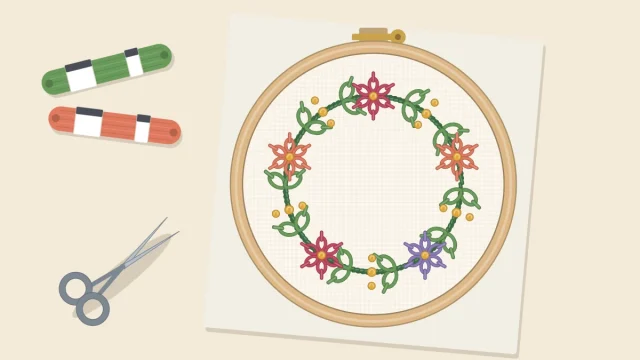
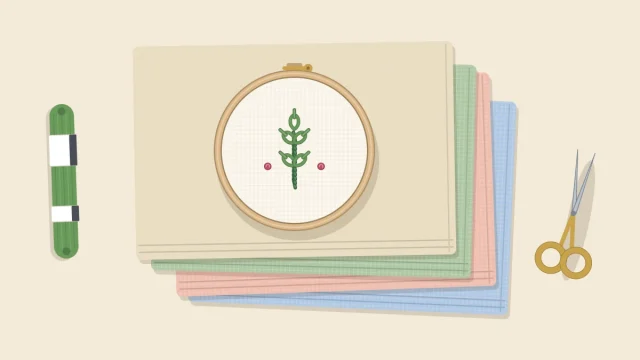
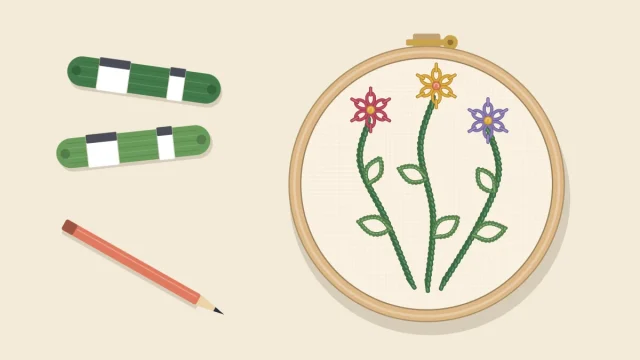
Draw a circle around a glass, stitch it in stem stitch, then add lazy daisy leaves, five small daisies and French knot buds. A forgiving first floral design for a 6-inch hoop.
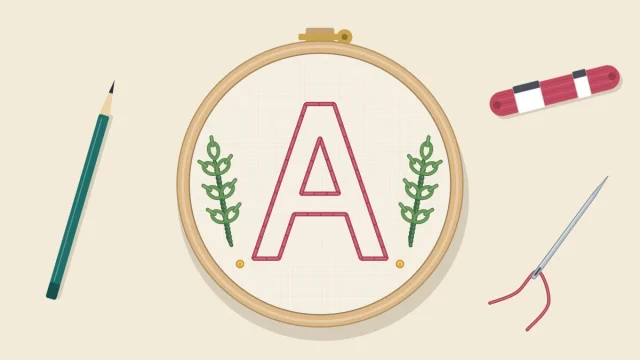
Stitch a single initial in a 6-inch hoop: choose and size the letter, center it with two guide lines, outline it in backstitch, then add an optional satin stitch fill and two leafy sprigs.
Hoops, needles, fabric and floss: what each one does and how to choose it.
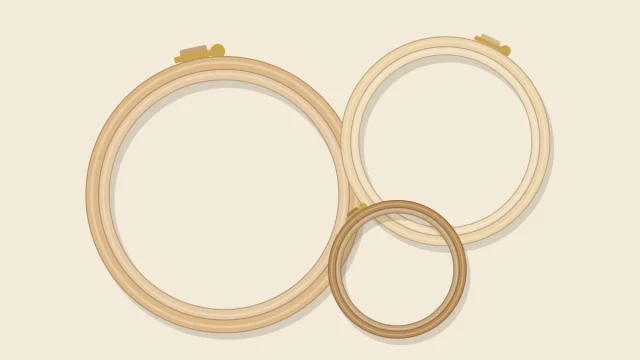
Wood, plastic or spring tension? 4, 6 or 8 inches? A plain guide to embroidery hoop sizes and types, what makes a hoop grip well, how to bind the inner ring, and working hoops versus display hoops.
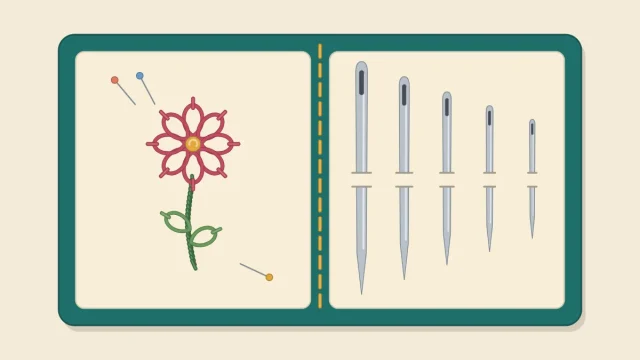
Embroidery, tapestry and milliner needles each do a different job, and their sizes run backward: the higher the number, the finer the needle. Here is how to match a needle to your strand count.
A first embroidery kit needs only six things. Here is the short essential list, why small sharp scissors and a good marking tool matter, and which extras can wait until you need them.
A medium-weight woven cotton or cotton-linen blend in a light color is the easiest fabric to learn embroidery on. Here is how weave, weight and stretch affect your stitches.
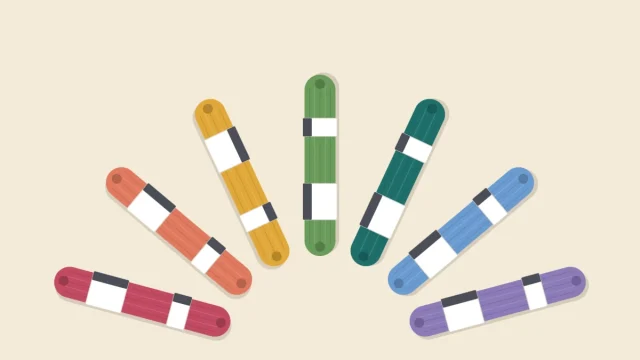
Six-strand cotton floss and perle cotton are the two threads most beginner patterns use. Learn how they differ, what the color numbers mean and how to pull floss from a skein without a tangle.
Transferring patterns, keeping an even tension, finishing and caring for your work.
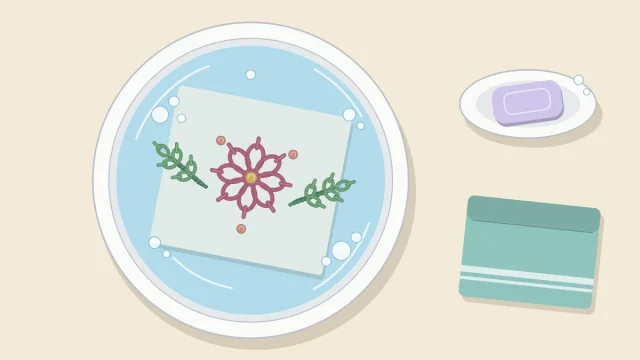
Test for color bleed, wash by hand in cool water with mild soap, roll the piece in a towel and press it face down on a soft base. A cautious routine for cleaning finished embroidery.
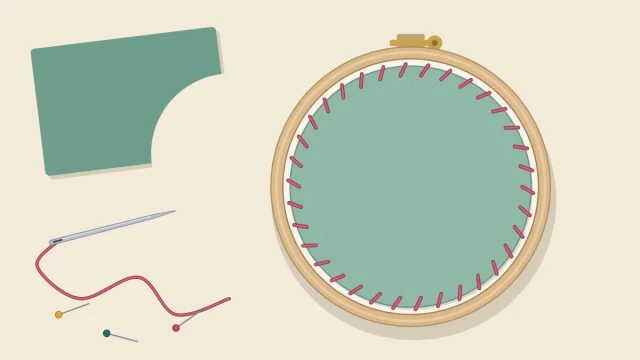
Center the design, trim the fabric to a circle, gather it with a line of running stitch and cover the back with felt. A simple, reversible way to make a stitched hoop ready to hang.
Good embroidery tension means each stitch lies flat on the fabric without lifting or pulling the cloth in. Learn what to look for, how the hoop helps and a short drill to train your hands.
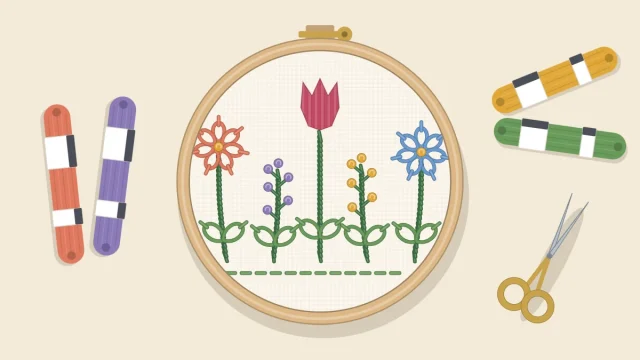
A row of five simple flowers, two daisies, a tulip and two knot-flowered sprigs, worked in four beginner stitches in a 6-inch hoop. Includes a color palette and a clear order of work.
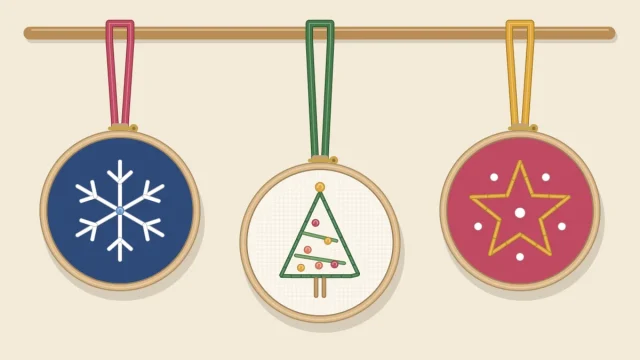
Three small motifs for 3-inch mini hoops, a snowflake, a tree and a star, stitched with straight stitch, backstitch and French knots, then finished with a felt back and a ribbon loop.
Why fabric wrinkles around your stitches and five fixes to try in order: re-hoop, ease the stitches, press damp and face down, block, and re-stitch. Plus how to avoid puckers next time.
Thread that is too long, too many strands, a loose hoop, tight stitches and six more habits that trip up new stitchers, each with a simple way to spot it and put it right.
Test for color bleed, wash by hand in cool water with mild soap, roll the piece in a towel and press it face down on a soft base. A cautious routine for cleaning finished embroidery.
Center the design, trim the fabric to a circle, gather it with a line of running stitch and cover the back with felt. A simple, reversible way to make a stitched hoop ready to hang.
Start with a hoop, a needle and one color of floss, learn one stitch at a time, and move on at your own pace. Every tutorial on the site is free to read, no sign-up needed.