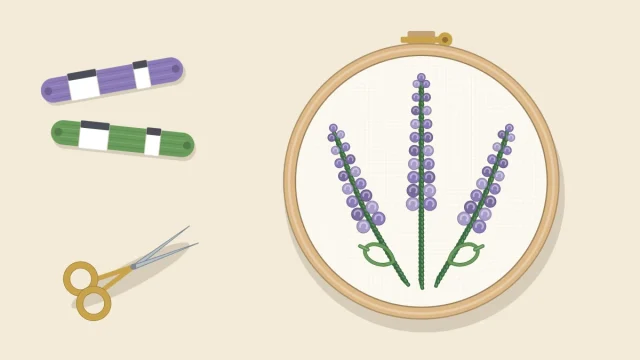
French Knots: A Beginner’s Guide That Actually Works
Learn the French knot step by step: how to wrap, how to hold the thread taut with your other hand, and why the needle must go down beside the hole it came up through, not into it.
Hand embroidery for beginners, step by step
The core hand-embroidery stitches, one guide per stitch, each with a numbered diagram.
7 tutorials published
Learn the French knot step by step: how to wrap, how to hold the thread taut with your other hand, and why the needle must go down beside the hole it came up through, not into it.
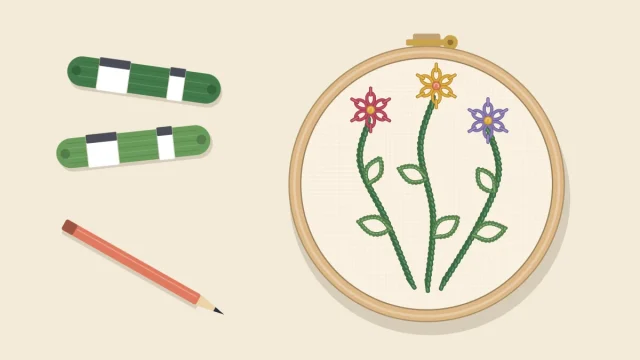
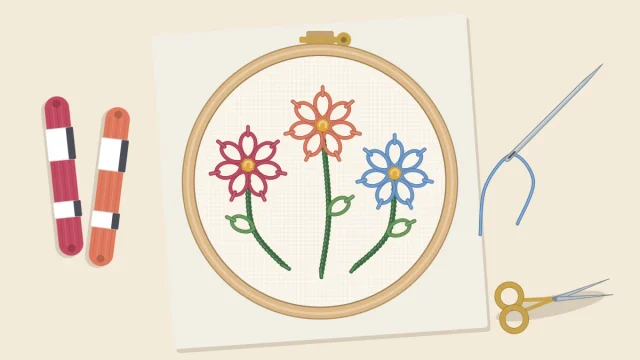
Lazy daisy stitch is a single anchored loop that makes an instant petal or leaf. Learn the three numbered points, then build a five-petal flower around a center.
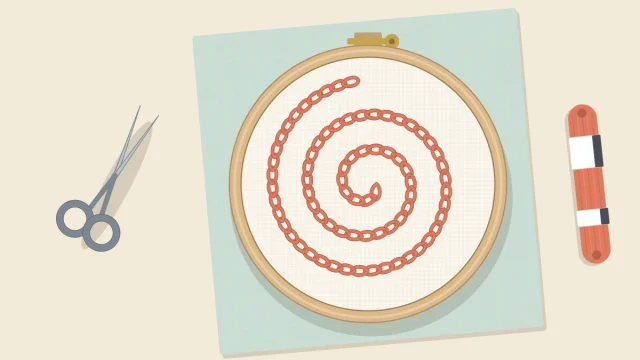
Chain stitch makes a bold line of linked loops. Learn how to form each link, keep the loops even, anchor the last one, work curves and use rows of chain as a filling.
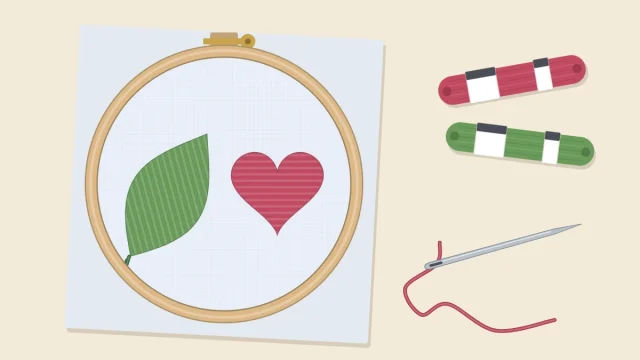
Satin stitch fills small shapes with smooth, parallel stitches. Outline the shape first, start across the widest part, and keep the stitches short and parallel for a clean edge.
Stem stitch makes a slightly raised, twisted line that follows curves beautifully. Learn the three numbered points and the one rule that matters: keep the thread on the same side.
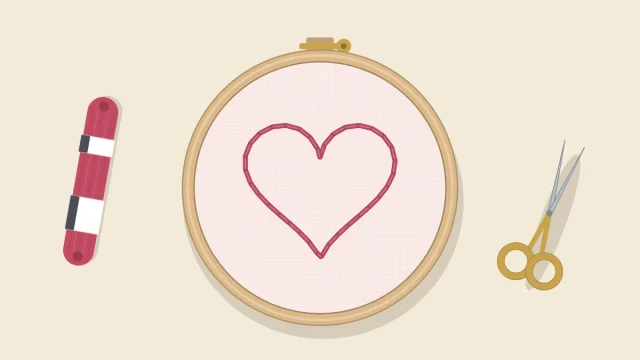
Backstitch gives a solid, unbroken line for outlines and lettering. Follow the three numbered points, then learn how stitch length controls smooth curves and sharp corners.
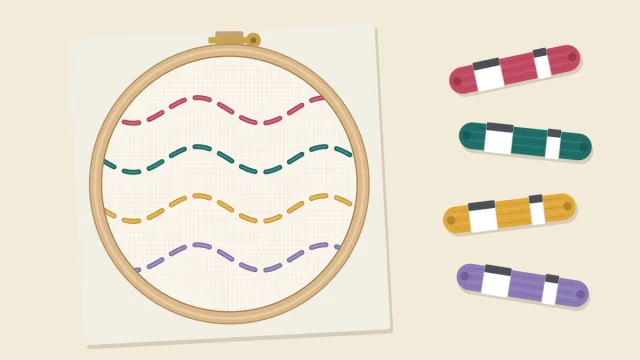
Running stitch is a simple dashed line and the natural first stitch for a beginner. Learn the four numbered points, how to keep stitches and gaps even, and three easy variations.