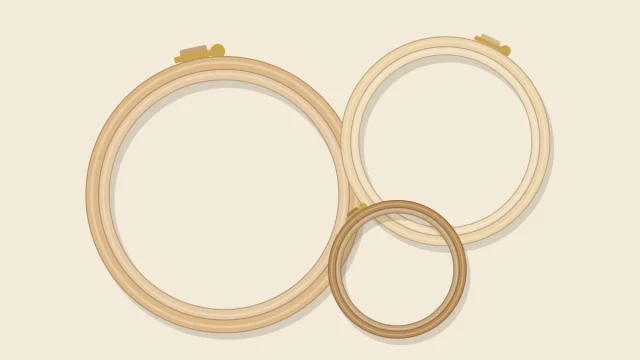
How to Choose an Embroidery Hoop: Sizes and Types
Wood, plastic or spring tension? 4, 6 or 8 inches? A plain guide to embroidery hoop sizes and types, what makes a hoop grip well, how to bind the inner ring, and working hoops versus display hoops.
Hand embroidery for beginners, step by step
You need very little to start hand embroidery: a hoop, a needle, a piece of fabric, some floss and a pair of small scissors. These guides explain what each item does and how to choose one, without brand names and without a shopping list.
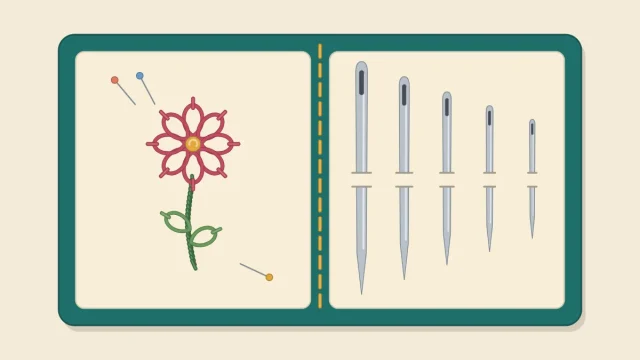
Hoops, needles, scissors and marking tools: what each one does and how to choose it.
Wood, plastic or spring tension? 4, 6 or 8 inches? A plain guide to embroidery hoop sizes and types, what makes a hoop grip well, how to bind the inner ring, and working hoops versus display hoops.
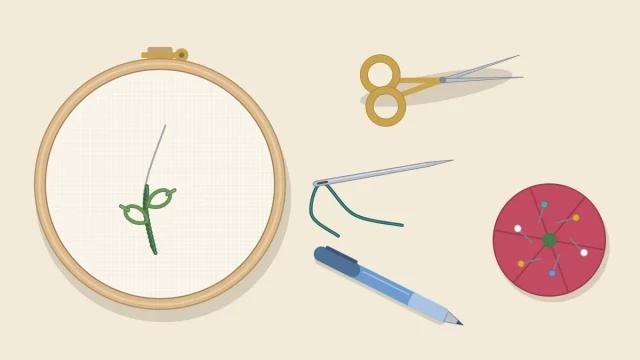
Embroidery, tapestry and milliner needles each do a different job, and their sizes run backward: the higher the number, the finer the needle. Here is how to match a needle to your strand count.
A first embroidery kit needs only six things. Here is the short essential list, why small sharp scissors and a good marking tool matter, and which extras can wait until you need them.
A medium-weight woven cotton or cotton-linen blend in a light color is the easiest fabric to learn embroidery on. Here is how weave, weight and stretch affect your stitches.
Six-strand cotton floss and perle cotton are the two threads most beginner patterns use. Learn how they differ, what the color numbers mean and how to pull floss from a skein without a tangle.